October 17, 2026 · 7 min read
What to Bring to Gym Checklist
Wondering what to bring to gym sessions without carrying useless weight? Here is the practical guide to packing smart for every workout.

August 25, 2026 · 8 min read

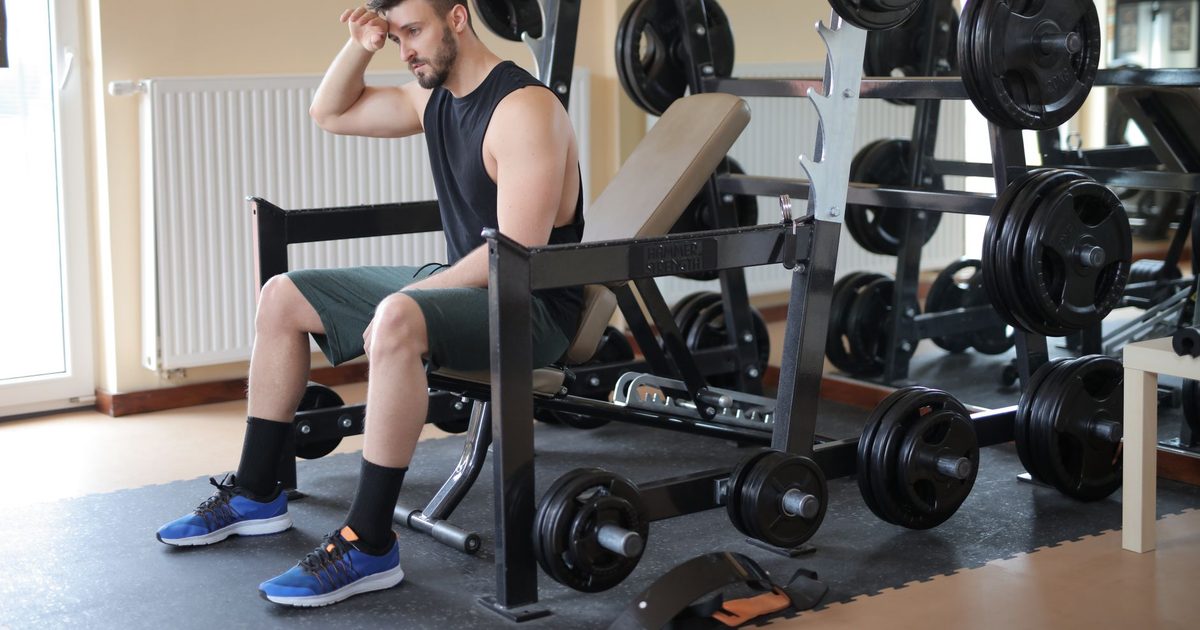
And then there is the guy who lives at the squat rack for two hours. We have all seen him, scrolling on his phone, doing a set every ten minutes, making everyone wonder if they need to pack a sleeping bag just to get their training done. It got me thinking about how many people get stuck in this trap when they are first starting at the gym. They think more time always equals more muscle or faster progress. If you are trying to build a sustainable habit, you need to know: how long should a workout be to get great results without wasting your life?
To put it simply, a productive gym session does not require half your day. For most people, the sweet spot is 45 to 75 minutes. This timeframe gives you enough room to warm up, hit your working sets with high intensity, and cool down. Anything beyond that usually means you are resting too much, doing too many unnecessary exercises, or just socializing by the water fountain. Let's look at the science and the math behind this so you can reclaim your schedule.
Why did sixty minutes become the golden rule of fitness? It is mostly because our calendars are built in one-hour blocks. Gyms schedule classes on the hour. Personal trainers book clients on the hour. It is a convenient unit of time for business, not a scientific law of human physiology.
If you finish a brutal leg workout in 42 minutes, you did not fail because you missed some arbitrary 60-minute mark. In fact, you probably had a fantastic, focused session. Your muscles do not have watches. They do not count minutes; they register tension, mechanical load, and fatigue.
But when you try to force every session to hit that magic one-hour mark, you end up stretching things out. You scroll on your phone longer. You take five-minute rest periods when you only need two. Or worse, you add useless extra exercises just to fill the time. That is how a tight, effective workout turns into a bloated chore.
(And yes, some days you might only have 30 minutes. If you spend those 30 minutes lifting with high intensity, you are still lightyears ahead of the person who spent 90 minutes half-heartedly walking on a treadmill while watching TV.)
Your target time depends entirely on what you are trying to accomplish during that session. Let's break down the realistic ranges based on different training goals so you can see where you fit.
When you train for pure strength, your sessions will naturally run longer. This is not because you are doing more work, but because you need massive rest periods. When you are squatting or deadlifting near your maximum capacity, your nervous system needs three to five minutes to recover between sets. If you do five working sets with five-minute rests, that is 25 minutes of resting on just one exercise. For strength lifters, a 75 to 90-minute session is completely normal and often necessary.
Building muscle requires a different approach. If your goal is hypertrophy, you do not need those massive rest windows. You can usually rest for 90 seconds to two minutes between sets. This keeps the session moving fast. A solid muscle-building workout can easily fit into 45 to 60 minutes. You get in, challenge the muscle, pump some blood, and get out to start recovering.
Focusing on general fitness or conditioning allows you to go even shorter. Circuit training, super-sets, and bodyweight intervals require very little rest. You can get an incredibly effective conditioning session done in 30 to 45 minutes. Going longer than that at a high intensity usually leads to a massive drop in form, which is where injuries happen.
Let's look at where the time goes during a typical gym visit. This is where most people get tripped up. They think they spent 90 minutes working out, but their actual training time was a fraction of that.
Let's run the numbers on a highly efficient, 60-minute muscle-building session:
| Phase of Workout | Duration | What You Are Doing |
|---|---|---|
| Warm-up & Mobility | 8 minutes | Light cardio, dynamic stretching, getting joints lubricated |
| Compound Lift (e.g., Squats) | 15 minutes | 3 warm-up sets, 3 heavy working sets, 2-minute rests |
| Accessory Lift 1 (e.g., Leg Press) | 10 minutes | 3 working sets, 90-second rests, adjusting machine |
| Accessory Lift 2 (e.g., Romanian Deadlifts) | 10 minutes | 3 working sets, 90-second rests |
| Isolation Lift (e.g., Leg Curls) | 8 minutes | 3 high-rep working sets, 60-second rests |
| Cool-down | 5 minutes | Slow walking, static stretching, lowering heart rate |
If you add that up, you get exactly 56 minutes. You performed 12 heavy working sets. You hit your target muscles hard. You did not waste time, yet you still finished under an hour.
Now, let's look at what happens in a disorganized 90-minute session. You walk in without a plan. You spend ten minutes wandering around looking for an open bench. You do a set, then spend four minutes replying to text messages. You run into someone you know and chat about their weekend for eight minutes. By the time you leave, you have been there for an hour and a half, but you only did ten working sets. Your muscles got cold between exercises, your focus was shot, and you wasted thirty minutes of your day.
Have you ever heard of junk volume? It is one of the biggest reasons beginner workouts stretch into the two-hour danger zone. Junk volume refers to sets and exercises that do not contribute to muscle growth or strength gains but still drain your energy and eat up your time.
Think of your energy in the gym like a phone battery. When you first walk in, you are at 100%. Your first exercise, let's say it is a heavy barbell squat, gets your absolute best effort. You lift heavy weights with great form. You are stimulating real muscle growth. By the time you get to your second and third exercises, your battery is at 60%. You are still doing great work.
But by the time you reach your sixth or seventh exercise, your battery is flashing red at 10%. You are exhausted. The weights you are lifting are too light to stimulate real growth, and your form is likely sloppy. You are essentially just making yourself tired for the sake of being tired. This extra work does not help you build muscle; it just dramatically increases the time you need to recover. It is far better to do four or five exercises with absolute focus and high intensity than to drag yourself through eight exercises just to say you did a long workout.
If you want to keep your workouts short, sharp, and highly effective, you need a system. You cannot just wing it. Here is the exact checklist I use to keep my sessions under an hour without sacrificing a single ounce of progress.
First, write down your workout before you step foot in the gym. Know exactly what exercises you are doing, how many sets you need, and what weights you plan to lift. When you have a plan, you move with purpose. You do not waste time standing in the middle of the weight room wondering what to do next.
Second, track your rest times. This is the ultimate time-saver. You do not need to guess when 90 seconds is up. Use your watch or an app to track it. You will be amazed at how quickly three minutes can pass when you are distracted. Keeping a strict eye on the clock keeps your heart rate up and your session on track.
Third, consider finding a training partner who matches your pace. Working out with someone else can keep you accountable, but only if they are focused. If you find someone who shares your goals, you can alternate sets smoothly. While you rest, they lift. It keeps the energy high and prevents you from scrolling on your phone during rest periods.
In the Workout With Me app, we built a social map to help you find people nearby who want to train at the same time. It makes it incredibly easy to coordinate quick, focused sessions at your local gym. You can host a workout, set the exercises, and even set a maximum number of participants so things do not get chaotic. Plus, the app features a strength compatibility score that matches you with partners based on your strength levels per muscle group. This means you will not be waiting twenty minutes for someone to finish a set with weights that are vastly different from yours.
If you prefer to train solo, that is completely fine too. You can use the app to track your sets, reps, and weights, and even use the built-in recovery body map to see which of your muscles are ready for another session. The S.H.A.R.P. training engine, which is available in our WWM Pro tier starting from $7.99 a month, can even auto-generate progressive overload plans for you based on your preferred session duration.
Keep your training focused. Stop measuring the quality of your workout by how many pages of the calendar you flipped through. Pick a smart plan, execute it with high intensity, and get out of the gym to let your body grow. If you want to make the process even smoother and find some great people to train with along the way, download Workout With Me for iOS or Android and see who is active in your area today.
October 17, 2026 · 7 min read
Wondering what to bring to gym sessions without carrying useless weight? Here is the practical guide to packing smart for every workout.
September 16, 2026 · 8 min read
Finding the best time to go to the gym is not about science. It is about avoiding the crowd and building a routine you will truly keep.
August 11, 2026 · 9 min read
Trying to figure out if you should start with machines or free weights at the gym? This guide breaks down the pros and cons of machines vs free weights for beginners.