September 7, 2026 · 9 min read
Breaking Your Strength Plateau
Stuck on the same bench press or squat weight? Learn how to break a training plateau with practical, floor-level adjustments to your routine.
October 8, 2026 · 7 min read
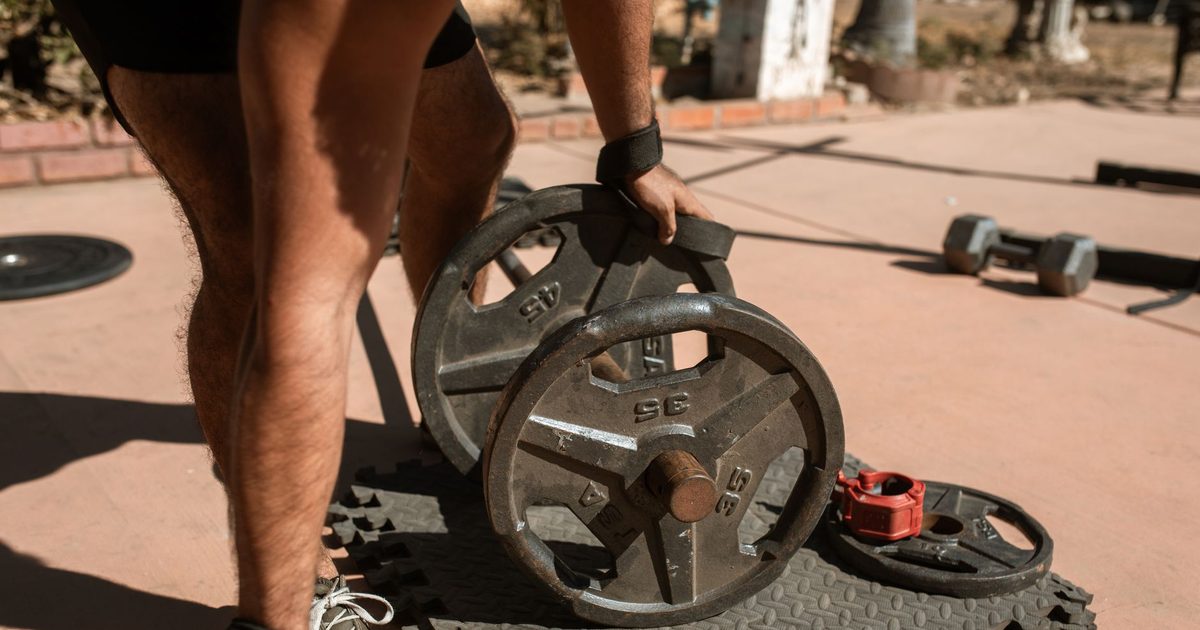
Everyone tells you that to get stronger, you just have to lift more weight than last time. It sounds so simple. Just add five pounds to the bar every single week and watch your muscles grow. But if you try doing that, you quickly realize you hit a brick wall within a month, your shoulders start hurting, and you feel stuck. The truth is, learning how to apply progressive overload in the real world is not about blindly adding weight until your joints scream. It is about playing a much smarter game with your body.
Linear progression is a trap that catches almost every beginner. If you bench press 135 pounds today and add five pounds every week, you would be benching 395 pounds in a year. That does not happen. Your body is not a linear calculator. It is a biological system that adapts to stress, but that stress must be carefully managed.
To build a solid foundation in strength training, you have to understand how your muscles view stress. They do not know how much weight is on the bar. They only feel tension, fatigue, and mechanical damage. If you force a heavier weight before your muscles, tendons, and nervous system are ready, your form breaks down. You start using momentum. Your hips rise off the bench, or you swing your back during curls. You think you are overloading the muscle, but you are just shifting the weight to your joints.
This is why perfect form consistency is the absolute foundation of progress. If your range of motion shrinks as the weight goes up, you are not overloading anything. You are just cheating. Every single rep of every single set must look identical. If you squat 225 pounds all the way down, but squat 245 pounds only halfway down, you reduced the work your quads had to do. You must master the movement pattern before you try to overload it.
The most reliable way to make progress without hurting yourself is a method called double progression. Instead of changing the weight every week, you change the reps first. Only when you hit your target reps across all your sets do you earn the right to increase the weight.
Let's look at a concrete example using the dumbbell bench press. Say your target is 3 sets of 8 to 12 reps with 50-pound dumbbells. On week one, you grab the 50s. You manage to get 3 sets of 8 reps. Your logbook reads: Set 1: 8 reps Set 2: 8 reps Set 3: 8 reps
This is your baseline. Next week, you do not touch the 55-pound dumbbells. You stick with the 50s, but you try to do more reps. On week two, you might do: Set 1: 9 reps Set 2: 8 reps Set 3: 8 reps
You did one more rep than last week. Your muscles did more total work. That is progressive overload. On week three, you hit: Set 1: 10 reps Set 2: 9 reps Set 3: 8 reps
You keep pushing this way week after week. Finally, on week six, you manage to hit: Set 1: 12 reps Set 2: 12 reps Set 3: 12 reps
You have reached the top of your rep range on every set. Now you increase the weight. The next week, you pick up the 55-pound dumbbells. Your reps will naturally drop back down to the bottom of the range, likely around 8, 8, 8. You start the process all over again.
This works because it respects your biology. Your muscles adapt quickly, but your tendons and ligaments take much longer because they have a poorer blood supply. If you increase the weight every week, your muscles might be strong enough to pull it, but your tendons will start to inflame. Double progression acts as a natural buffer, giving your connective tissue the necessary time to strengthen.
What if you cannot add reps or weight to a stubborn exercise? You can simply cut down your rest time. Doing the exact same sets and reps with 90 seconds of rest instead of two minutes is a massive upgrade in mechanical tension.
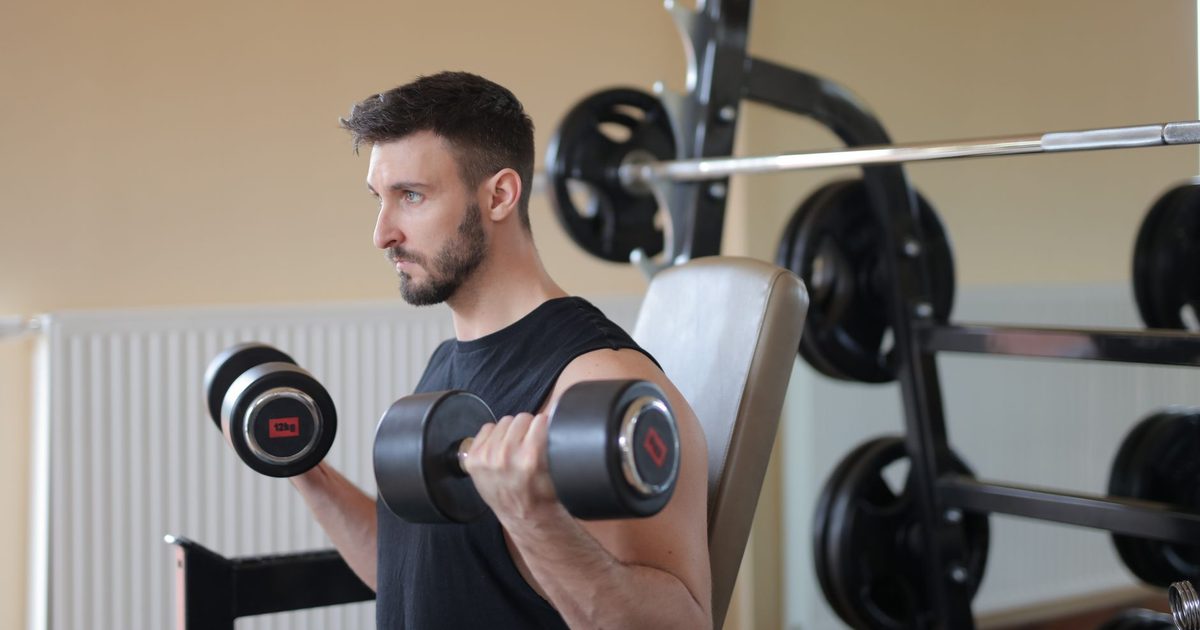
Let's talk about exercises like lateral raises, bicep curls, or tricep pushdowns. These movements use small muscle groups. If you are doing lateral raises with 15-pound dumbbells and you try to jump to 20 pounds, that is a 33 percent increase in weight. Imagine trying to increase your bench press by 33 percent in one week. It would crush you.
For small muscle groups, adding weight too fast is a recipe for injury and terrible form. You see people doing this all the time. They grab heavy dumbbells for lateral raises and end up swinging their entire torsos, barely using their shoulders at all.
Instead, use tempo to overload these movements. If you can do 12 reps of lateral raises with 15 pounds, do not go to 20 pounds yet. Instead, slow down. Spend three seconds lowering the weight on every single rep. Feel the burn. Control the weight. By slowing down the eccentric phase, you increase the time under tension. You make the exercise significantly harder without adding a single ounce of iron.
Another option is holding a pause at the peak of the movement. For a bicep curl, pause for one full second at the top when your biceps are fully contracted. For a leg extension, hold the squeeze at the top. This eliminates momentum and forces your muscles to produce active tension. Once you can control that slow tempo or pause for 12 reps, then you can make the jump to the next set of dumbbells.
You cannot apply these principles if you do not track your workouts. If you walk into the gym and try to remember what you lifted last Tuesday, you are wasting your time. You will end up lifting the same weights for the same reps, month after month. Your logbook is your map. You need to write down every set, every rep, and how hard it felt.
We use a tool called RPE, which stands for Rate of Perceived Exertion. It is a scale of 1 to 10 that measures how hard a set felt. An RPE of 10 means you could not have done a single additional rep. An RPE of 9 means you had one rep left in the tank. An RPE of 8 means you had two reps left.
If you do 100 pounds for 10 reps at an RPE of 10 on week one, and then on week two you do 100 pounds for 10 reps at an RPE of 8, you made progress. You did the same work, but your body handled it with less strain. Your nervous system became more efficient. This is why tracking RPE is so critical. It captures the hidden progress that standard numbers miss.
In Workout With Me, we built a tool that handles this tracking flawlessly. You can log your workouts on a clean interface, and the app calculates your estimated one-rep max and strength scores. This means you do not have to do mental math on the gym floor. You just focus on beating your past self.
Your body is not a machine. You cannot push for progress forever. Eventually, fatigue will accumulate in your joints and your nervous system. You will start feeling sluggish, your joints will ache, and your lifts will stall. When this happens, you do not need to push harder. You need to back off.
A deload is a planned period of recovery where you reduce your training volume and intensity. It is not a sign of weakness. It is a strategic pause that allows your body to rebuild itself stronger than before. If you keep pushing through extreme fatigue, you will eventually get hurt or hit a severe plateau.
Instead of waiting for an injury to force you to rest, program your deloads proactively. In Workout With Me, our S.H.A.R.P. training plans automatically schedule a deload as the fifth cycle of your training block. This keeps you moving forward without burning out.
If you want an app that takes the guesswork out of your progression and tracks your recovery dynamically, check out Workout With Me. It is free to download on iOS and Android, and it makes finding the right partners to train with incredibly simple.
September 7, 2026 · 9 min read
Stuck on the same bench press or squat weight? Learn how to break a training plateau with practical, floor-level adjustments to your routine.
August 19, 2026 · 6 min read
An honest comparison of light weights vs heavy weights to help you decide which rep ranges and loads actually build real muscle.
August 7, 2026 · 10 min read
Trying to figure out compound vs isolation exercises? We break down the differences, benefits, and when to use each for maximum gains and efficient workouts.