October 8, 2026 · 7 min read
How to Apply Progressive Overload
Learn how to apply progressive overload to your workouts safely and effectively for consistent, long-term strength gains without hitting plateaus.
August 19, 2026 · 6 min read
Most of the advice you hear about lifting heavy versus lifting light is complete garbage.
For years, people told you that heavy weights are only for building massive bulk, while light weights are strictly for toning. It's a neat little story, but it's totally wrong. When you're looking at light weights vs heavy weights, the real magic doesn't happen because of the number on the metal plate. It happens because of how close you get to your actual limits. You stand in front of the rack, staring at the 15-pound dumbbells and the 40-pounders, wondering which one will actually give you results without wrecking your joints. You want to get stronger, but you also don't want to spend your life sidelined by nagging injuries. Let's look at what actually works when you're on the gym floor.
Lifting heavy is the undisputed king of building pure, raw strength. When I say heavy, I mean weights that limit you to about 1 to 6 reps per set before your form completely breaks down. This style of training works by forcing your central nervous system to recruit more muscle fibers at once. It's like upgrading the engine in your car. Your body learns how to coordinate its efforts to push or pull a massive load. If your main goal is to see your bench press, squat, or deadlift numbers skyrocket, you simply can't avoid heavy weights. You need that intense mechanical tension to force your bones and connective tissues to adapt and grow denser.
But there's a real trade-off here. Heavy training is incredibly taxing on your joints, tendons, and your nervous system. (I learned this the hard way after a month of trying to max out on squats three times a week.) When you lift near your limit, your form must be absolutely perfect. A tiny slip-up with a heavy barbell can put you out of commission for weeks. You also need longer rest periods between sets, sometimes up to three or four minutes, which means your workouts will take much longer. It's an efficient way to build strength, but it demands a high price in terms of recovery and time.
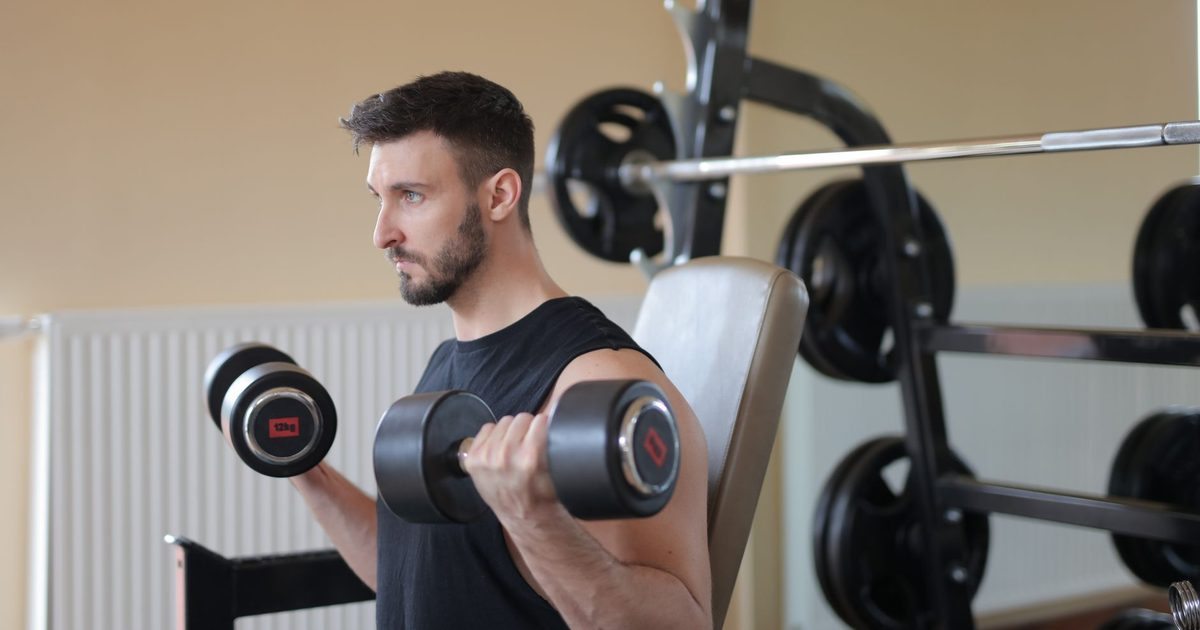
Light weights are often unfairly dismissed as useless for building muscle. People think they're only for warm-ups or for people who don't want to work hard. That's a huge mistake. When we talk about light weights, we're usually talking about loads you can lift for 15 to 30 reps. Research keeps finding that if you take these high-rep sets close to muscular failure, you can build just as much muscle size as someone lifting heavy. Your biceps don't know if you're holding a 50-pound dumbbell or a 15-pound dumbbell; they only know how hard they have to contract to finish the movement.
The big advantage here is safety and joint health. Light weights place far less shear stress on your joints and connective tissues. If you're recovering from an injury or have nagging knee pain, high-rep light training is a lifesaver. It also gives you an incredible pump, which is just metabolic stress building up in the muscle. This metabolic stress triggers growth factors that help your muscles grow larger. The downside? It hurts. Pushing a set of 25 reps to true failure burns like crazy, and many people quit the set long before their muscles actually get close to their limit.
Your muscles don't have a built-in calculator. They only understand mechanical tension and metabolic fatigue. If you stop a light set when it starts to tickle, you won't grow.
To make sense of how these two approaches stack up in the real world, we need to compare them across the things that actually matter when you're planning your week. Here is how they compare across the board:
| Feature | Heavy Weights (1-6 Reps) | Light Weights (15-30 Reps) |
|---|---|---|
| Primary Benefit | Maximum strength and neural drive | Muscle endurance and joint safety |
| Muscle Growth | High (even with shorter sets) | High (only if taken close to failure) |
| Joint Strain | Very high | Low to moderate |
| Time Needed | High (requires 3-5 minute rests) | Low (requires 1-2 minute rests) |
| Mental Fatigue | High central nervous system drain | High local muscle burn and discomfort |
| Risk of Injury | Higher (due to absolute load) | Lower (easier to control form) |
With heavy weights, the biggest trap is ego lifting. I see it every single day. People load up a bar with way more weight than they can handle, cut their range of motion in half, and bounce the weight off their chest or swing their hips to move it. You aren't building strength this way; you're just begging for a joint injury. If you have to cheat to move the weight, it's too heavy.
And with light weights, the mistake is the exact opposite: people don't push hard enough. Because light weights don't feel heavy at first, it's easy to do 15 easy reps, put the weights down, and think you did something. But those first 10 reps did almost nothing to stimulate growth. The real work only starts when the burn kicks in. If you aren't struggling on those last few reps, you're just burning calories, not building muscle.
You don't actually have to choose between these two styles of training. In fact, the best lifters use a smart mix of both. A great way to structure your workouts is to start with your heavy compound lifts when you're fresh, then move to lighter, higher-rep isolation movements to finish off the muscle.
For example, you might start your chest day with three heavy sets of bench press in the 5 to 8 rep range. Your nervous system is fresh, your energy is high, and you can safely handle the heavy load. After that, you could transition to lighter dumbbell flyes or cable crossovers for sets of 15 to 20 reps. This gives you the best of both worlds: raw strength from the heavy compounds, and a massive pump with low joint strain from the light isolation work. If you want to build a balanced, sustainable routine, blending these two approaches is the smartest way to approach strength training over the long haul.
If you're forced to choose just one, the winner depends entirely on your specific goals. If your main goal is to get as strong as humanly possible, heavy weights win handily. There's no substitute for heavy loads when it comes to teaching your brain and muscles to work together to move heavy objects.
But if your goal is simply to build muscle, look good, and keep your joints healthy for the next twenty years, light weights taken to near-failure are incredibly underrated. They allow you to get a fantastic workout with a fraction of the injury risk. For most regular gym-goers who just want to stay fit and build a great physique, a hybrid approach that leans on moderate to light weights with occasional heavy blocks is the ultimate sweet spot.
Lifting is a long game. Find a partner who can help you stay consistent, load up a weight that challenges you, and get to work. If you want to find people in your area who are hitting the same weights as you, download the Workout With Me app, check the live map for local sessions, and start training together.
October 8, 2026 · 7 min read
Learn how to apply progressive overload to your workouts safely and effectively for consistent, long-term strength gains without hitting plateaus.
September 7, 2026 · 9 min read
Stuck on the same bench press or squat weight? Learn how to break a training plateau with practical, floor-level adjustments to your routine.
August 7, 2026 · 10 min read
Trying to figure out compound vs isolation exercises? We break down the differences, benefits, and when to use each for maximum gains and efficient workouts.